
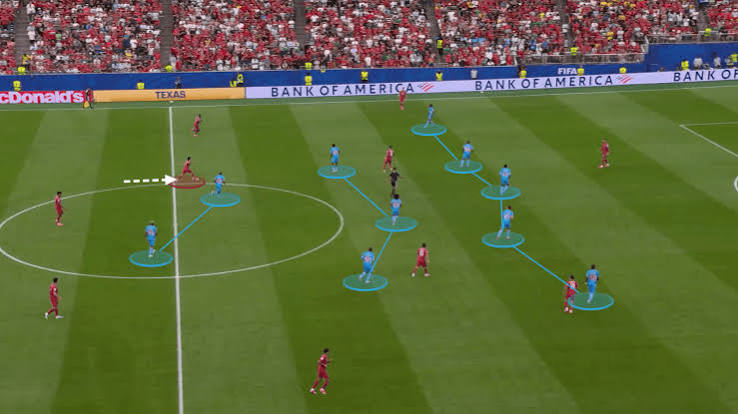

In modern La Liga football, full-backs are no longer just defenders; they are often key engines of chance creation and territorial pressure. Across the 2017–2018 season, team and player stats highlight how many sides relied on their wide defenders for width, crosses, and overlaps, feeding both shot volume and the number of corners they won. Understanding that cause‑and‑effect chain helps clarify why some matches produced long stretches of pressure from the flanks and why certain teams’ games consistently generated more attacking actions and corner kicks than the league average.
Why La Liga 2017–2018 Favoured Attacking Full-Backs
Tactical analysis of La Liga highlights a league that prizes technical play, structured possession, and aggressive pressing, which in turn pushes full-backs into advanced roles to provide width and stretch compact defences. In 2017–2018, several top and mid‑table sides used narrow front threes or tucked‑in wingers, shifting responsibility for touchline occupation and deep wide runs to their full‑backs. The outcome was that full-backs became frequent recipients of switches of play and outlets under pressure, and their decisions—drives, crosses, cut‑backs—directly influenced how often attacks ended in shots or deflections that turned into corners.
Which Teams Showed Patterns Consistent with Aggressive Full-Back Use
Team statistics from the league show clear differences in crossing volume, wide play, and corner counts. Sides near the top of corner‑per‑game tables, such as Barcelona and Atlético, combined sustained territorial pressure with repeated deliveries from wide areas, an indicator of high full‑back involvement. League‑wide numbers put the average corners per game around just under 10, with top teams significantly above that mark while others clustered nearer the mean. These patterns align with full‑backs who push high, recycle possession in the final third, and test defensive lines with crosses that are frequently blocked or headed behind, each one adding to the corner count and keeping pressure sustained.
Mechanisms: How Full-Backs Turn Territory into Shots
Attacking full-backs influence shooting volume through several linked mechanisms. First, by overlapping beyond wingers, they drag opposing full-backs and wide midfielders deeper, creating space for inside forwards or central midfielders to receive and shoot from just outside the box. Second, their early or late crosses into the penalty area produce chances directly—headers, volleys, second‑ball opportunities—that show up as shots even when the initial delivery is partially cleared. Third, by repeatedly receiving the ball high on the flank and driving toward the byline, they force defenders to commit blocks, which either stop shots at source or deflect the ball behind for further corners, resetting the attack in another dangerous phase. The impact is that a full-back’s positioning and decision‑making can raise both shot counts and the number of restarts from the attacking corner quadrant.
How Attacking Full-Backs Generate Corners in Different Ways
Corners arise not only from direct crosses but from a series of micro‑events where full-backs play a central role. A high wide defender who hits repeated low crosses and cut‑backs into crowded zones increases the chance that defenders will clear hurriedly behind their own goal rather than risk central turnovers. When full-backs combine with wingers in overloads near the corner flag, quick one‑twos and pull‑backs often lead to blocked shots or deflections that again finish over the byline. Over a full season, teams that consistently use these patterns—documented in corner statistics as sides with above‑average “corners for”—tend to be those where full-backs spend substantial time in the attacking third rather than holding conservative positions.
Illustrative Sequence List: Full-Back Actions Leading to Corners
Because the path from a full-back’s positioning to a recorded corner involves multiple steps, it helps to unpack typical sequences seen in a La Liga 2017–2018 context. Rather than listing isolated actions, think in connected chains where each decision increases the probability that the attack ends in either a shot or a deflection behind. Tactical analyses of wide play and pressing in the league underscore how often these chains began with switches to advanced full-backs on the weak side.
- Switch of play finds the full-back free on the opposite flank; he takes an aggressive first touch forward toward the final third, drawing the wide defender out.
- The full-back combines with an inside forward or central midfielder, either through an overlap or underlap, to reach a position near the edge of the penalty area or byline.
- From there, he delivers a driven cross or low ball into a crowded box, where defenders under pressure choose safety first, blocking or clearing behind goal instead of risking a loose ball in front of goal.
In many La Liga 2017–2018 matches, repeating these sequences across both halves produced a steady stream of corners even when open‑play finishing was wasteful. The significance for analysis is that corner volume is less about one‑off luck and more about full‑backs repeatedly forcing defenders to make uncomfortable choices in wide areas.
The Trade-Offs: When Aggressive Full-Backs Fail to Add Value
Not every full-back who pushes high translates territory into useful shot or corner volume. Some sides in 2017–2018 saw their wide defenders commit turnovers in advanced zones, leading to counter‑attacks rather than sustained pressure. Crosses taken from deep or under minimal pressure can inflate raw delivery numbers without increasing shot quality, because opponents find them easier to clear without conceding corners. Additionally, when a team’s forwards lack aerial presence or timing, even good wide service can lead to low‑quality attempts or ineffective second balls, reducing the practical impact of full‑back involvement on meaningful shooting opportunities. The outcome is that evaluating full-back contribution requires looking at how often their actions produce shots or corners, not just how often they touch the ball in advanced areas.
In this context, some bettors ask whether their betting tools help differentiate full-backs who genuinely drive attacking output from those who only appear busy. When using a sports betting destination such as ufa168 เข้าสู่ระบบ, the relevant question is whether its La Liga sections provide breakdowns of team corners, cross statistics, and wide attack tendencies alongside the main markets; if the interface lets you map patterns of high corner counts and shot creation to teams known for aggressive full‑backs, you can more confidently interpret corner or total‑shot lines as reflections of structural attacking behaviour rather than guesswork based on reputation alone.
Full-Back Influence on Shot Location and Quality
Beyond raw counts, attacking full-backs subtly shift where and how shots are taken. Consistent wide overloads pull opponents’ defensive lines toward the ball side, opening diagonal lanes for cut‑backs to the edge of the box where midfielders shoot from central positions. Early crosses from full-backs can create headed chances around the penalty spot, which vary in quality depending on marking and delivery but still raise total shot numbers. When full-backs arrive late into the final third, they sometimes shoot themselves, especially when defences sag toward strikers and leave space at the top of the area; those attempts from just outside the box are less efficient than shots closer to goal but contribute to overall volume. The impact is that a full‑back’s attacking role affects not only how many shots a team takes but also the mix of high and medium‑quality attempts in its profile.
Comparative Table: Team Profiles, Full-Back Use, and Corners
Drawing on 2017–2018 stats and tactical descriptions, we can sketch typical relationships between team style, full-back behaviour, and corner volume rather than focusing on exact club names.
| Team profile (2017–2018) | Full-back role | Typical corner volume | Effect on shots |
| Possession-dominant top side | Very high, constant overlaps & switches | High | Many box entries, varied shot quality |
| Pressing mid-table crossover | Aggressive in spells, situational runs | Medium‑high | Bursts of shots after turnovers |
| Conservative low block | Limited forward runs, deep positions | Low‑medium | Fewer wide chances, more long shots |
This table highlights how full-back usage patterns are tightly linked to both corners and shot profiles. For analysts, the core insight is that corner and shot markets effectively price not just offensive talent but also structural decisions about how full-backs are deployed across 90 minutes.
Where Aggressive Full-Back Play Can Backfire
High full‑back positioning carries defensive risks that sometimes neutralise offensive gains. When both full-backs push forward simultaneously and possession is lost, the spaces they leave behind become prime channels for counter‑attacks, leading to high‑quality shots against. Over a long season, some La Liga 2017–2018 sides with attacking full‑backs saw matches stretch into end‑to‑end exchanges, increasing total shots and corners for both teams rather than delivering one‑sided pressure. Fatigue also plays a role, as full‑backs who repeat long sprints up and down the wing can lose precision in delivery or be late recovering, which alters both the attacking and defensive balance as games progress. The impact is that aggressive full‑back systems are most effective when supported by strong counter‑pressing and disciplined covering from midfielders or centre‑backs.
Summary
In La Liga 2017–2018, attacking full-backs were central to how several teams generated both shooting chances and corner volume. Their forward runs, overlaps, and crosses turned switches of play into repeated box entries, while the defensive responses they provoked—blocks, hurried clearances, and deflections—fed a steady supply of corners that kept pressure alive. The strength of this approach depended on how well teams converted wide pressure into meaningful shots and how carefully they managed the defensive risk that comes with pushing side defenders high. For anyone analysing that season, treating full-backs as structural levers rather than auxiliary runners offers a clearer view of why certain sides consistently produced high shot and corner counts, and why others did not.